The outbreak of COVID-19 and subsequent developments have brought appalling experiences for the countries, including those considered as ‘developed.’ The case of India is not different. Apart from being a public health emergency, the pandemic becomes a socio-economic and psychosocial crisis. The millions of poor, who are managing from hand to mouth, had left with no options of income generations. Amid of governments declared measures for free ration and financial supports, a large section has left with no options for food and other necessities.
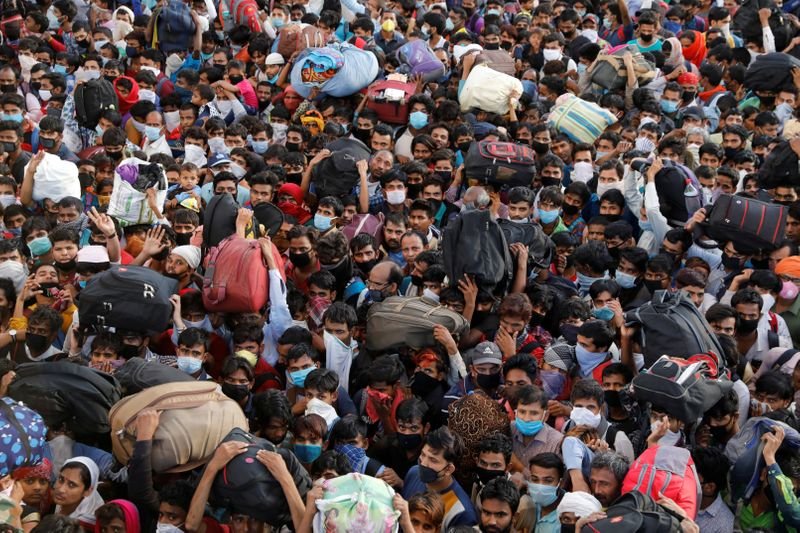
The case is critical for the rural and urban poor, migrant workers, daily wagers, and agricultural laborers. At the beginning of March itself, many have faced the issues of irregular income, and complete cessation has occurred by the declaration of lockdown by the government of India. The large scale movement of interstate migrant laborers soon after the announcement of lockdown was the result of insecurity felt by the poor. The reality of poverty makes the phrase ‘stay at home’ largely inconceivable for many. A crucial question arises here is what the options left for the poor are? The answer is being on the receiving end of all available means. The charity organizations, NGOs, political parties, and many individuals are exclusively involving in extending necessary support to the people in distress in the form of food, groceries, masks, and other necessities.
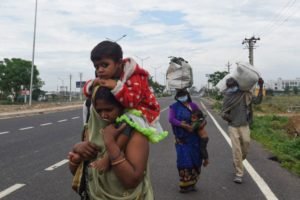
The involvement of people and organizations in charity services and volunteering at the time of a huge crisis like COVID-19 is undoubtedly promising. However, as used to be, most of such efforts are recorded, photoed, and further publicized for personal and organizational benefits. This is what scholars call ‘poverty porn.’ It is a strategy used by organizations, especially in the development sector, to generate sympathy among people and subsequently to raise funds by portraying poverty. However, the concept is not limited to organizations for marketing their good deeds or raising funds. Individuals and other interest groups also make use of poverty by photoed and videoed representation of help rendered to the poor. For the last two weeks, I have seen many such photos and videos on social media platforms. Haven’t you? The objectification of poor peoples’ deprivation and helplessness is a common phenomenon in India, especially in the media. As usual, it becomes at the heights during the pandemic COVID-19.
Since the outbreak of COVID-19, especially after the imposition of lockdown in India, a large number of photos and videos portraying poverty and the ‘good deed’ of extending help to poor appeared in social media. Individuals, representatives of political parties, and organizations are uploading most of them. The essence of such photos and videos vividly portrays the helplessness of the poor and highlight the contribution of people/organization who at the facilitating end. What is the psychology of such representation of charity at the time of crisis? Is it just usual posting and social media engagement? The answer is an obvious no because attempts are evident in manifesting individual and organizational identity in such posts. It is a fact that altruistic actions bring emotional and psychological well-being to the people involved. However, publicizing the same is the indication of seeking attention from the larger public.
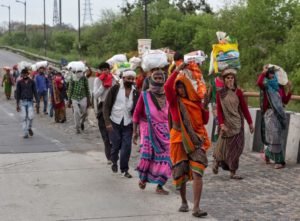
Further, many of such graphics and photography representing donations and helps in the social media tactically represents identity to yield personal, political, and organizational benefits. In general, the act of poverty porn is considered offensive, mainly due to the fact that it sells the helplessness of the helpless. It also undervalues human dignity. People who are already in the course of crisis are further being compelled to pose for the photos and videos merely for survival needs. Though it temporarily resolves the material needs, the other aspects of poverty, including inferiority, insecurity, and shame, will have a debilitating impact. Taking into these considerations, Steve Corbett and Brian Fikkert, in their book When Helping Hurts, point out why helping poor is the most sensitive act.
Is the private affairs of the poor, their life and life circumstances, are something to be exposed to the benefit of privileged? Unfortunately, the reality is personal spaces of the poor are marketed, sold, and the predators yield better fruits out of it. Several ethical issues also arise amid poverty porn. A large number of photos and videos posted on the public platforms have taken without permission from the people who appear in it. Even if such consent has taken from them, the purpose of the same is not generally communicated, especially its use in the public platforms. These are not considerations when the intention is getting appreciation in the virtual platforms and the long-term personal and organizational benefits out of it.
In current socio-political scenario, precipitated by the COVID-19, the use of poverty porn is in its height in the social media platforms. The purpose of the same is different for different people involved in it. Development sector organizations, as usual, use it for raising funds while political parties, interest groups, and individuals showcase their proactive engagement in helping the poor and needy with an ulterior motive. The developmental organizations and others who receive funds from the public should have alternative strategies than merely portraying the pictures of poor receiving helps. Transparency should be ensured, what they have received, and what has spent on what, at least during these periods, but not at the cost of portraying the poor.
In consolidation, poverty porn does more harm than good. It has emerged as a social epidemic that undignifies the poor. It delimits the suffering of the poor into material deprivation. The broader social realities appended to poverty, and poor peoples’ life is objectified. It may help organizations and individuals to raise more funds without accountability and with a lot of personal benefits, but does minimal on sensitizing the public about the actual problem even during the pandemic. In the public domain, poverty porn creates sympathy for the poor, not empathy. The emotive use of photoed representations of the poor and helping them yield only short term benefits. The extensive and monotonous use of such depictions normalizes and desensitizes the public for the actual causes of the poor.