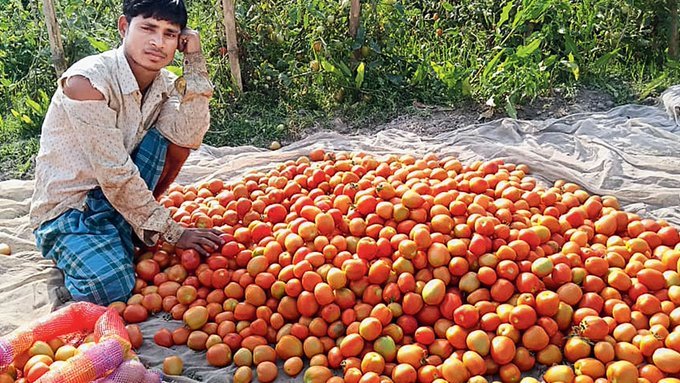
COVID 19 pandemic is on its peak. Unemployment rate in India (all over world also) is making daily new records amid lockdown due to the pandemic. All big cities in India are in the grip of the pandemic so; there is an atmosphere of desperation all around. If we talk about its treatment then prevention is only the cure and we all are aware about its cure, which is lockdown. But problem in front of labour workforce is that how they would earn their livelihood for survival. Because all works have been shut down, this problem is not short term but is going to persist for a longer period of time. After the end of lockdown, it will be more formidable in the form of hunger, unemployment and mental depression and these problems have their own negative consequences. But we can win over these problems, how we can? This article is about the possible solutions of problems of farmers and migrant labourers.
Measure initiatives
We should not forget that many developed countries of the world have started their journey of economic growth from agriculture. The Great Britain also focused initially in their agriculture around mid 17th century, and gradually agriculture revolution transformed into industrial revolution. For solutions, we will need to talk of Bharat. Bharat, connotes the information about rural part of India which lives in villages. Around 70 percent of total population lives in rural India and mostly rural population depend on agriculture. In view of the standard Keynesian macroeconomics theory, when people start losing their jobs and economy goes into recession, in such situations, government investment plays a very significant role to revive aggregate demand or to create new jobs in the economy. The socialist and welfarist nature of our constitution also favours it. This is the very right time for the government, to focus intensively on the development of agriculture sector and it will also be absolutely compatible with their economic policies. Because in current Economic Survey 2019-20, governments showing their interest into market economy (Invisible hand with hand of Trust) and wants to end all government intervention from the agriculture sector. Deepak Nayyar, a well-known economist of India, published an article in Economy and Polity Weekly (Economic Liberalization in India Then and Now, January 14, 2017) stated that the economy needs to strengthen its domestic infrastructure before its handing over to the world market. Mahatma Gandhi always advocated for strengthening the economy of villages. He believed that all local needs should be fulfilled within the production system of the villages itself and if surplus arises, and then it should be supply to urban areas. Same system was adopted by the government of Japan by law, after World War II, in their economic development. We all are the eye witness about flourishing of economy of Japan even after got destructed in War.
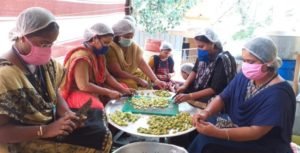
In India, agriculture is an important occupation in terms of employment generation. The reason behind it is that the people, who lived in the villages, get vocational education in agriculture spontaneously and most of them start working in the same. Now, we need some action plans which the government should work upon. Jobs opportunities in the labour market is going to be shrinked. This is the crucial time; the government should develop the agricultural infrastructure with well-determination. Apart from employment generation, it will create future of the agricultural sector, and ultimately will provide a horizon to economy of the country. Under this plan, the government can focus on area like; irrigation facilities, increasing storage capacity for agricultural products, adequate availability of good quality seed and marketing facilities. Second, the government can prepare a cluster of farmers groups based on their cultivating crop considering the farming system of villages all over the country. For instance, make a cluster for the producers of wheat, mustard, gram and vegetables etc. Now the government can form a group of 15-20 farmers and these groups can be arranged in cluster. These cluster should be trained for small scale industries. Its need to provide support by government in setting a manufacturing unit (cottage industries) at small level like wheat milling machine, mustard crushing machine likewise. In beginning, government should provide some incentives to the farmers and ensure market for their production.
Ultimate Output
If we practice same, would be able to develop many lakhs of social entrepreneur groups of farmers across the villages in India. In this way huge jobs will be created by government expenditure. The produce from these cottage industries will contribute significantly to the national income account. When the domestic farmers will start to become a brand, then big foreign retailers will get a tough competition. After successfully completion of this manufacturing setup in agricultural sector, the government can lift all interventions from agriculture by leaving it free in the open market. After these practices, there is no need to provide or fix Minimum Support Price (MSP) for agriculture crops. The domestic support to Indian agricultural producers is also facing problems at World Trade Organisation (WTO), so it will be end up. By doing so, a new industrial section will come, which can write the script towards tackling the problems of unemployment and migration.