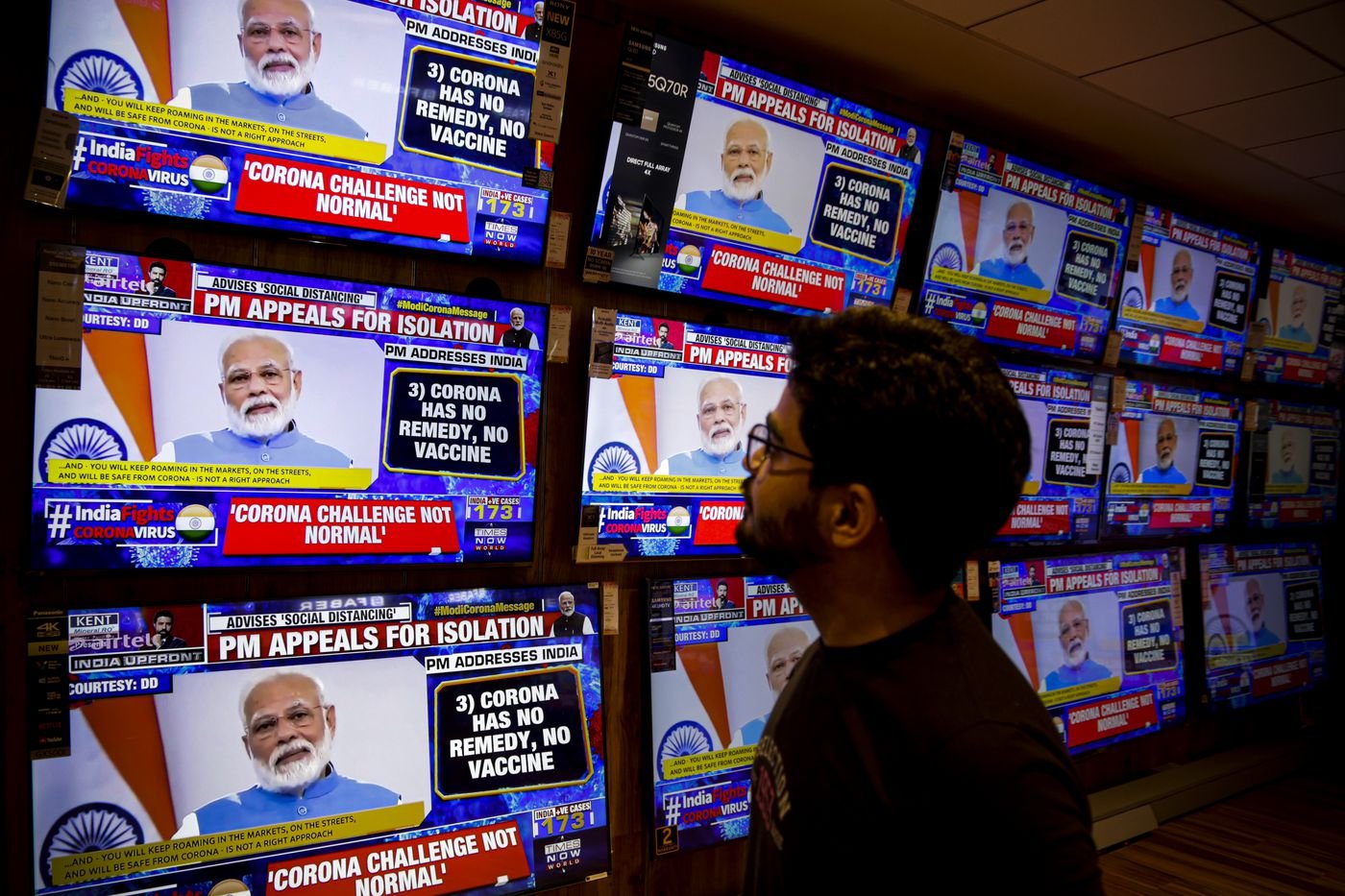
The emergence of the Corona Virus led to the emergence of confusion and rapidly evolving situation across the globe. Facts are still unclear about how this disease spread and what is the fatality rate? What is the incubation period? Scientists have put various theories, but the final solution is yet to come. All the questions make anyone worried about his/her life and why not. But what remains the question is how we deal with these issues. What are its consequences and how it is socially and psychologically constructed around the globe and particularly in the Indian context? To answer this, we have to look at the role played by print and electronic media, including social media.
Role of Media
Media of any type has both advantages and disadvantages. One of the benefits of media is to get information in a quick and timely manner. Media expose various problems faced by society and thus becomes a positive aspect of it. However, with every advantage, there are chances of disadvantages too, like inaccurate reporting, loss of privacy, overstatements, and agenda settings. In the past few days, we have seen how some of the Indian media have reported this pandemic and tried to give it a communal colour. Such biased reporting of the media made it difficult for the large population to differentiate between truth and misinformation. And therefore, suck fake or biased reporting get intensified through the use of social media and become more visible in the public domain. It results in the creation of social disharmony as well as affects the psychology of a healthy human mind.
Due to the Corona pandemic, people are witnessing the loss of livelihood and prosperity, but misreporting by the fourth pillar of democracy put us in a more vulnerable position. No one denies that Indian media have not done good work. Time and again, it has helped in exposing several social stigmas and creating awareness on issues that matter to us. But when we are going through such a crisis, the media should behave more responsibly.
Matter of worry
Social distancing and Quarantine are the two words trending on every media. The best way to prevent the spread of the Corona Virus is to keep ‘Social Distancing’ and ‘Self-isolation’. However, repercussion of social-distancing and self-isolation is also seen on the mental health of the people.
The nationwide lockdown that has been enforced in India to tackle this pandemic has left people themselves in a difficult situation. Be it either self-isolation at home or mandated Quarantine. A recent Lancet study found that social-distancing and self-isolation are resulting in Post-traumatic Stress Disorder (PTSD) symptoms, confusion, and anger. According to Venkatesh Babu GM, Consultant Psychiatrist, Department of Mental Health and Neurosciences, Fortis Hospital, Bangalore; nervousness, fear of contamination, constant reassurance-seeking behaviour panic attacks, sleep disturbances, excessive worry and feeling of helplessness are some other possible ramification of Corona Virus.
Another response from the people towards Corona Virus affected person is the stigmatization. People are busy uploading the pictures and share the details of the affected person. This does not only affect the patient but the entire family. From the content analysis of various social media platforms, it is argued that instead of creating constructive steps dealing with the coronavirus, media (particularly social media) is busy in stigmatizing the already affected people. Social distancing has become social discrimination.
What matters now?
Corona pandemic is a reminder that we are not just individuals, but a collection of individuals who depend on each other and our roots are connected. In this crisis, two factors are essential to consider tackling COVID-19. Firstly, the collective and community response and secondly, the right use of Mass Media and Social Media. The Integration of government and non-government agency can play a crucial role in maximizing the effective management of social and psychological crises. The need of the hour is not just limited to relief and charity but also to mitigate and demonstrate safety skills.
In the flood of information, it is difficult for ordinary people to differentiate between information and misinformation. Therefore the role of mass and social media users become more crucial for making this world well-informed and conscious. In a pandemic like COVID-19, mainstream media should invite health and other health professionals who can make ordinary citizens informed and aware of successfully dealing with the present crisis. Also, social media users should restrain, spreading fake news or information that create social-disharmony and rupture the social fabric of society.
In these troubled times, we need to stay united and spread the message of love and harmony for helping each other. Also, in this challenging time, boosting the morale of doctors and other stakeholders, working day and night dealing with the pandemic is very much needed.