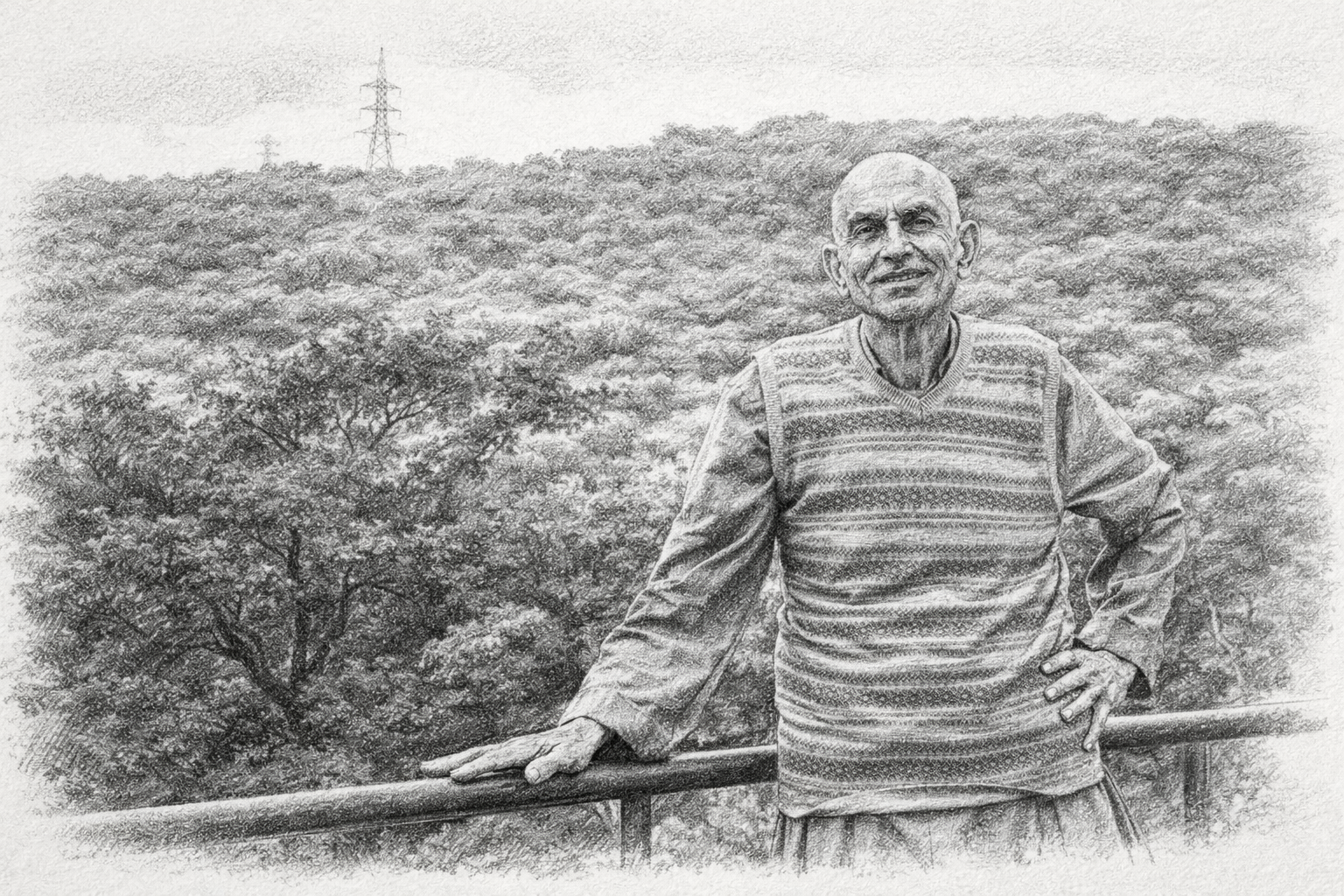
Madhav Gadgil was a world-class scientist who chose his country over luxury. He completed his studies at the famous Harvard University in America. Most people stay there to earn a very high salary. Gadgil did the opposite and returned to India in 1973. He passed away in Pune on Wednesday night, January 7, 2026. He was 83 years old and had been ill recently. He spent his life walking through many forests and small villages. He wanted to build a greener and fairer future for everyone. Gadgil believed science should help the poor, not just the rich. He was a kind man who listened to every person. His work changed how India looks at its beautiful natural world. He leaves behind a very strong legacy for the entire nation. He was a true hero who fought for the planet.
Gadgil was born in the city of Pune in 1942. His father was a very famous economist named D.R. Gadgil. His father taught him about the value of social justice. Madhav grew up respecting the great ideas of B.R. Ambedkar. He studied the science of biology in Pune and Bombay. Later, he earned a PhD from the prestigious Harvard University. His wife, Sulochana, was a brilliant and talented mathematician. They both turned down the easy life of American luxury. They joined the Indian Institute of Science located in Bengaluru. Director Satish Dhawan helped him start a new ecology center. This center became a place for deep study and learning. He wanted to use his knowledge to help his own people. His choice to return home was a very bold one. He loved India more than fame or money.
Gadgil did not want to stay inside a closed lab. His real classroom was the great and beautiful outdoors. He followed the long elephant trails in the Bandipur forest. He studied the clear streams in the high Western Ghats. Gadgil used clever math models to study the natural world. But he also talked to many farmers and tribal people. He listened to their old stories about the forest rules. For him, ecology was about sharing warm meals and campfires. He treated every local villager like a member of family. He proved that humans and nature must live together well. This was a new way to look at environmental science. He believed that local people know the land the best. This respect for people made him a unique scientist. He combined deep science with very deep human empathy.
He worked closely with the famous historian Ramachandra Guha. Together, they wrote the book This Fissured Land in 1992. This book explained how forests were managed in the past. In 1995, they wrote another book called Ecology and Equity. They used the word “omnivores” for people using many resources. They called villagers “ecosystem people” because they protect the land. His final book was titled A Walk Up the Hill. It tells many stories of living simply and with nature. These books are now very important for students and experts. They show us how to live in balance with earth. Everyone who cares about nature should read these great books. They offer a map for a better and greener future. These writings remain the gold standard for Indian environmentalists.
Gadgil helped to write the important environmental laws of India. He worked on the Biological Diversity Act of 2002. This law helps villages to record their local plant life. In 2024, the UN gave him the Champions of the Earth award. His most famous work was the 2011 Western Ghats report. He argued that we must protect all fragile mountain areas. He said local village councils should have the final power. Many industry leaders fought against his bold and new ideas. However, recent floods show that his warnings were very correct. His work will guide us for many decades to come. We must follow his path to save our natural world. He will be missed but his ideas will never die. He taught us that nature is our greatest treasure.