Now, developed and developing countries are on back foot in context to business and economy. Because, life supporting things like food and medicines seem more important during crisis. No one would think that that USA will depend on India for medicine. But, it happened due to outburst of pandemic. Today, world is facing the critical problem of COVID-19. India is of no exception. The first case of Coronavirus in India was reported from Kerala on 30th January. Up to May 4, 462 people have recovered from the infection in Kerala including three deaths among all 14 districts of the state. But due to quick response of the government machinery, Kerala is coming out of pandemic very quickly. It was also reported by The News Minute about best containment model of Kerala to tackle the situation. Further, head of the Indian Council for Medical Research NIV, Pune committed to refer the Kerala model of testing and containment strategies. However Kerala with its limited revenue is able to manage this pandemic effectively. It’s an example for all states of India.
The Kerala Model
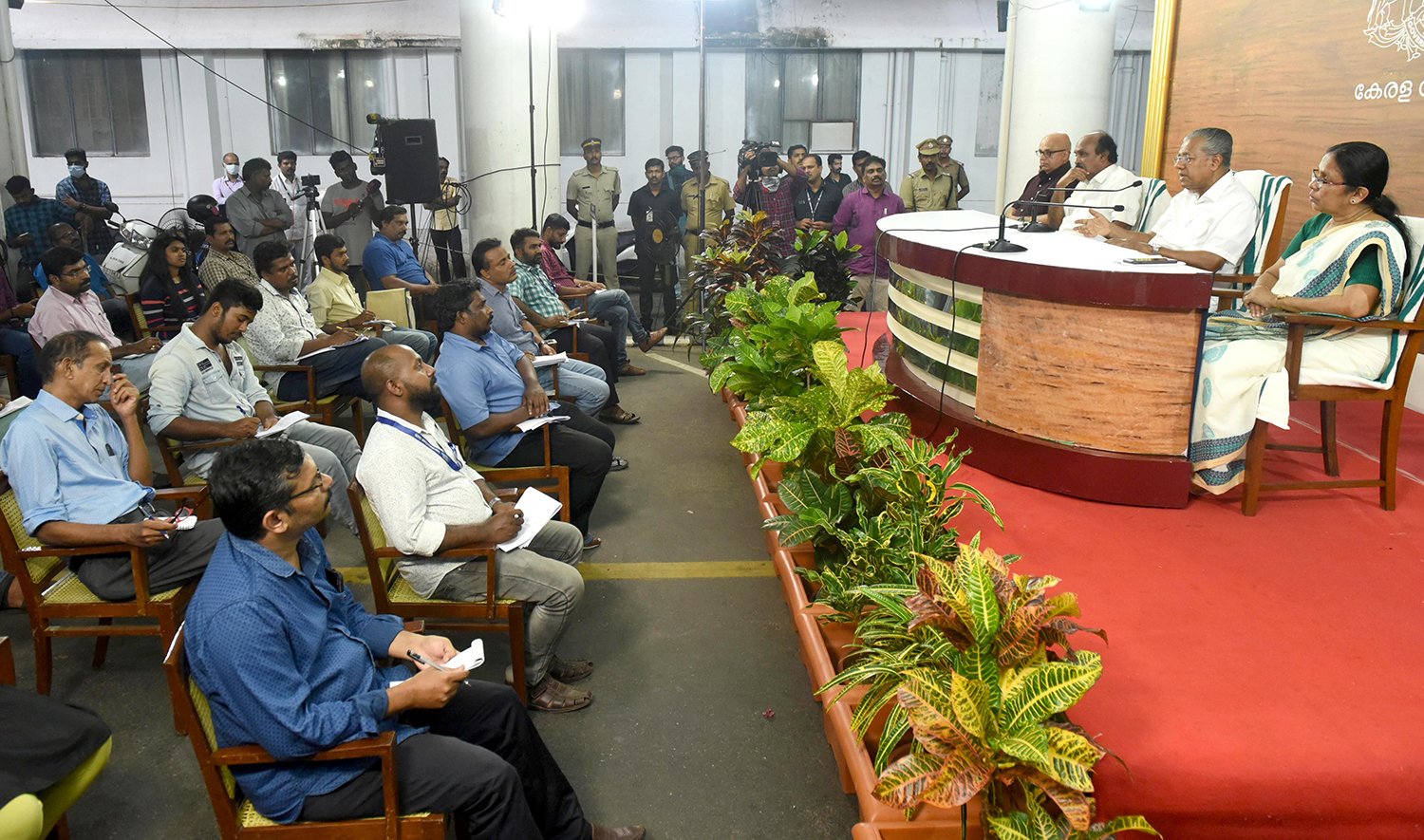
Really, the role of government is appreciable under the leadership of Health Minister of the State who is in touch with groups of people doing different kinds of work such as medical officers, nurses, ASHA workers. For moral support, to be in touch with grassroots level is extremely important. It gave opportunity to the State Health Minister to talk to the people and hear them out. But, we cannot ignore the focus of the government which has emphasis on public health, education and social upliftment through investment of significant part of the state budget. Apart from that Kerala has a long experience with disaster management and infectious tropical diseases like Chikungunya, H1N1, and more recently Nipah, reported by Vogue. Since two consecutive years, Kerala is facing the problem of flood, however through the state machinery and public participation Kerala always came up with affirm confidence. These experiences and patient-friendly, high-tech, and low cast public funded hospitals helped Kerala to manage this pandemic. Especially in rural areas primary healthcare units are very important. They had availed testing labs and are made able to diagnose the early signs of the disease. Medical college hospitals have new equipment and good infrastructure. That’s why they have been tackling the COVID-19 pandemic most effectively.
In this scenario, we cannot ignore the institutions like Kerala Institute of Local Administration (KILA). It has significant contribution in empowering local self-governance institute like panchayats including Accredited Social Health Activists (ASHA workers) and Neighbourhood Groups (NHGs) in state. As an institution, Kudumbashree played a significant role in pandemic management. Kudumbashree is an associations of women in every neighbourhood of kerala known as neighbourhood groups (NHGs) members. Its state-wide network proved effective in tackling tough situations. Today, there are 43 lakhs Neighborhood group members in Kudumbashree. They were supported by the respective panchayats, Health Department and ASHA workers. The Hindu has described NHGs as a fine model of community service by the self-help group in post-disaster reconstruction. In flood of 2018 & 19, the NHGs gave donations, contribution in material terms of food, kits, and cleaning materials. Kudumbhashree lost about dozen number of members during the clearance of mud in 2018 to maintain normalcy in Kerala.
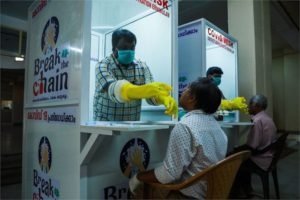
To counter this pandemic, Kudumbashree has formed 1.9 lakhs WhatsApp groups with 22 lakhs NHG members to educate them about Government instructions regarding Covid-19 during lockdown. Currently information is being sent to NHG groups via this platform. This makes good channels for conducting IEC campaign to inform the NHGs that elderly people should take special care to prevent the pandemic. So, all NHGs members discussed to break the chain with special care for elderly members. There are 1,54,858 destitute families in Kerala with 1,14,719 elderly members (above 60 years of age). They get food through community kitchens and medical care through primary health centres (PHCs), if needed. Kudumbashree also contacts those above 60 years of age who are in quarantine and inquire about their needs to ensure that they receive various services needed in convergence with Health and other Departments. Kudumbashree has enlisted 2176 resource persons to call these families with elderly members once in five days. Through 360 community counsellors, Kudumbashree does counselling and mental support to those in need to counteract various mental issues faced by them in relation to Covid-19 and lockdown.
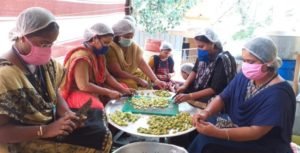
As per Kudumbashree site, more than 29.35 lakhs cotton masks has prepared and sold. Also, 21 micro enterprise units of NHGs have prepared 5,115 litres of sanitizers as on 9th May. During the time of Covid-19 pandemic, Kudumbashree has started to make face shields, a protective gear that can be used by medical staff engaged in treatment of Covid-19 patients. 1144 community kitchens have been started in Panchayats and Municipalities with the help of Local Self Government Institutes to help guest labourers (new terminology adopted by state at place of migrant labourers). As result of which, no migrant labourers are bothered at cross roads similar to other states. In this way, Kudumbashree in support to Government’s initiatives related to COVID–19 pandemic prevention activities, provides food/related services to people who are under observation at Corona Care Centres. Apart from the activities planned by State Mission, the District Missions have also come up with various activities as required locally. This includes various activities of recreations during lockdown to solve various local problems as required by District Collectorates. From the above discussion we can say that Kerala Model is nothing, but it is only a well communicated strong network of institutions of the state like Kerala Institute of Local Administration (KILA), and local self-governance institutions as PRIs, Asha Workers, NHGs’ member in response to COVID-19 at the grassroots. But, it is absent in other states of India.
The Way Ahead
In 2014, during the general election, the Gujarat model was talked too much. Of course, this model gave a face of Prime Minister, but did not give a model of governance to nation. The prosperity of Gujarat is mostly relied on capitalist model. Really, it has nothing to show excluding AMUL which has limitations. Apart from social and economic life of some districts of the state, AMUL is not visible anywhere. It has no role in governance and disaster management. Today, it is not only most severely affected by the pandemic, but also demanded for out-sourcing health professionals to control the situation. On the other hand, Kerala has less faith in Public Private Partnership (PPP) model of governance. Due to responsible, accountable and transparent government, Kerala is coming out of the pandemic very quickly through the community participation. In spite of having network of empowered institutions, inclusive and cooperative nature of governance, Kerala model has not talked in any of the general elections of India. It often come in discourse on issue of beef in association with left political ideology. But reality is that apart from this pandemic, Kerala model has many things to show & teach. Other states need to copy this model for the betterment of people, community, and society as whole.